top of page
3D Animation
Pioneers of Animation
Joseph Plateau
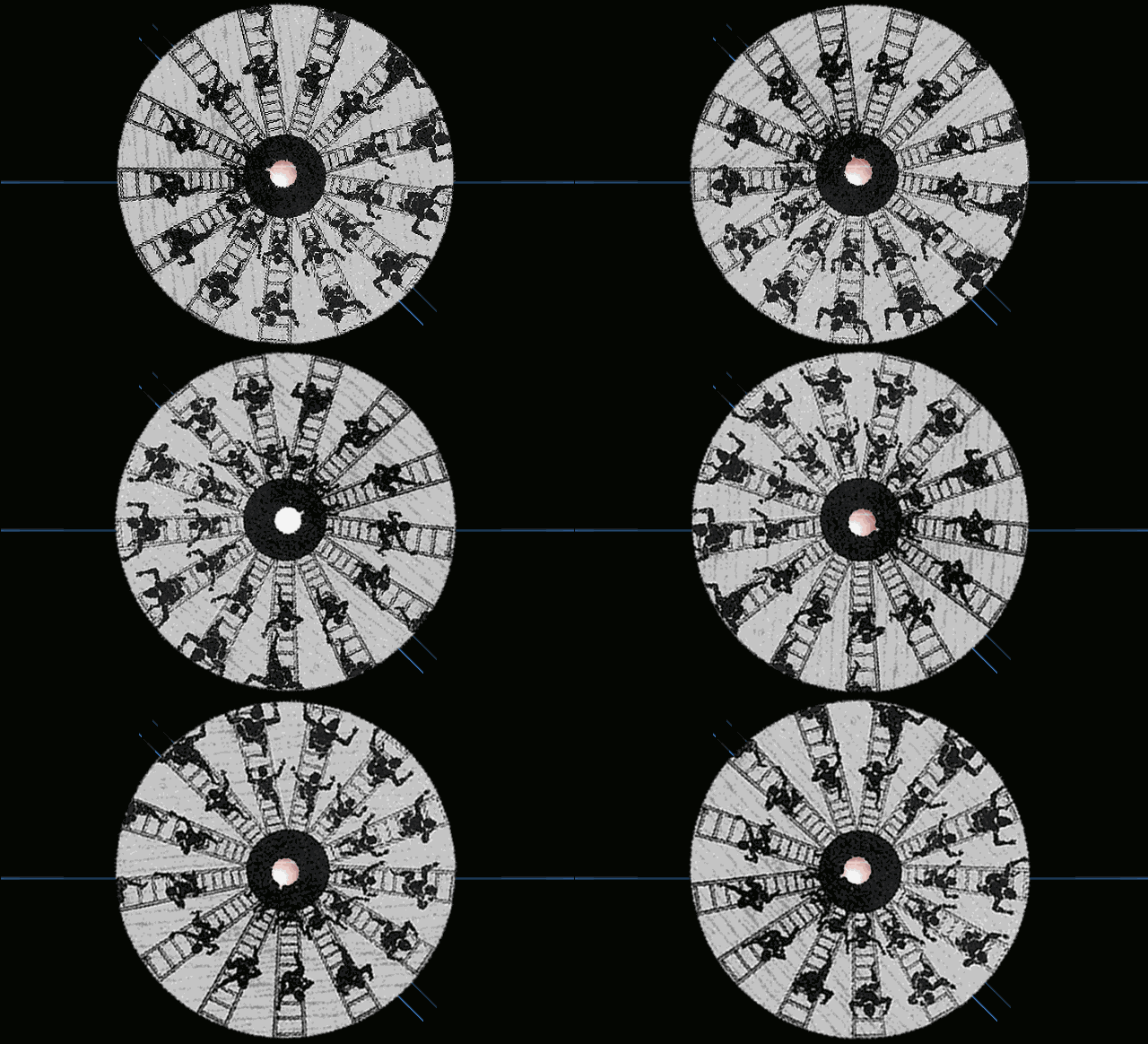
Joseph Antoine Ferdinand Plateau was a Belgian physicist. He was the first person to demonstrate the illusion of a moving image. He was born in 1801 and died in 1883. He described the construction and the action of a disc with 16 slits and 16 intermediate sectors. When 16 identical drawings are put in the sectors, they see a moving image when the disc revolves in a mirror to make it look like a continuious sequence. The phenakistoscope (also spelled phenakistiscope or phenakitiscope) was an early animation device that used the Persistence of vision principle to create an illusion of motion.
Emile Raynaud
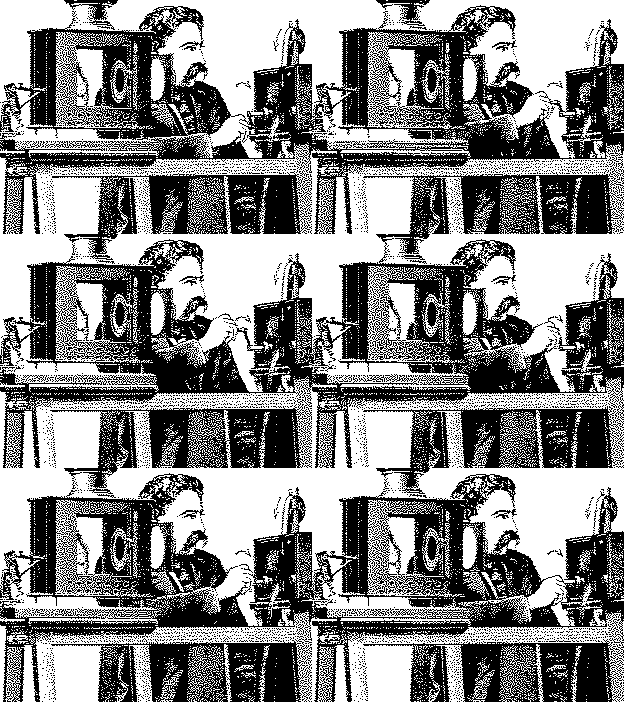
Emile Raynaud created the Praxinoscope in 1877 and the Theatre Optique in 1888, and in 1892 he projected his first animated film in public at the Musee Grevin in Paris. He was born in 1844 and died in 1918. The Praxinoscope is a devlopment of the Zoetrope, he replaced the slits on the Zoetrope with an inner circle of mirrors which made the pictures brighter and smoother when watching. He deveoped this and in his last versions of the Praxinoscope the pictures could be projected. A few of his films are; Pauvre Pierrot! (1892), Reve au coin du deu (1894), Guillaume Tell (1896). Emile Reynaud soon went out of flavor when the Lumiere brothers and the kinescope were over taking his device. On 28th October 1892 he projected the first cartoon which was ‘pauvre pierrot’ in Paris. The cartoon was stop animation and consisted of 500 individually painted glass plaits and then a light would of been shot them.
William Horner
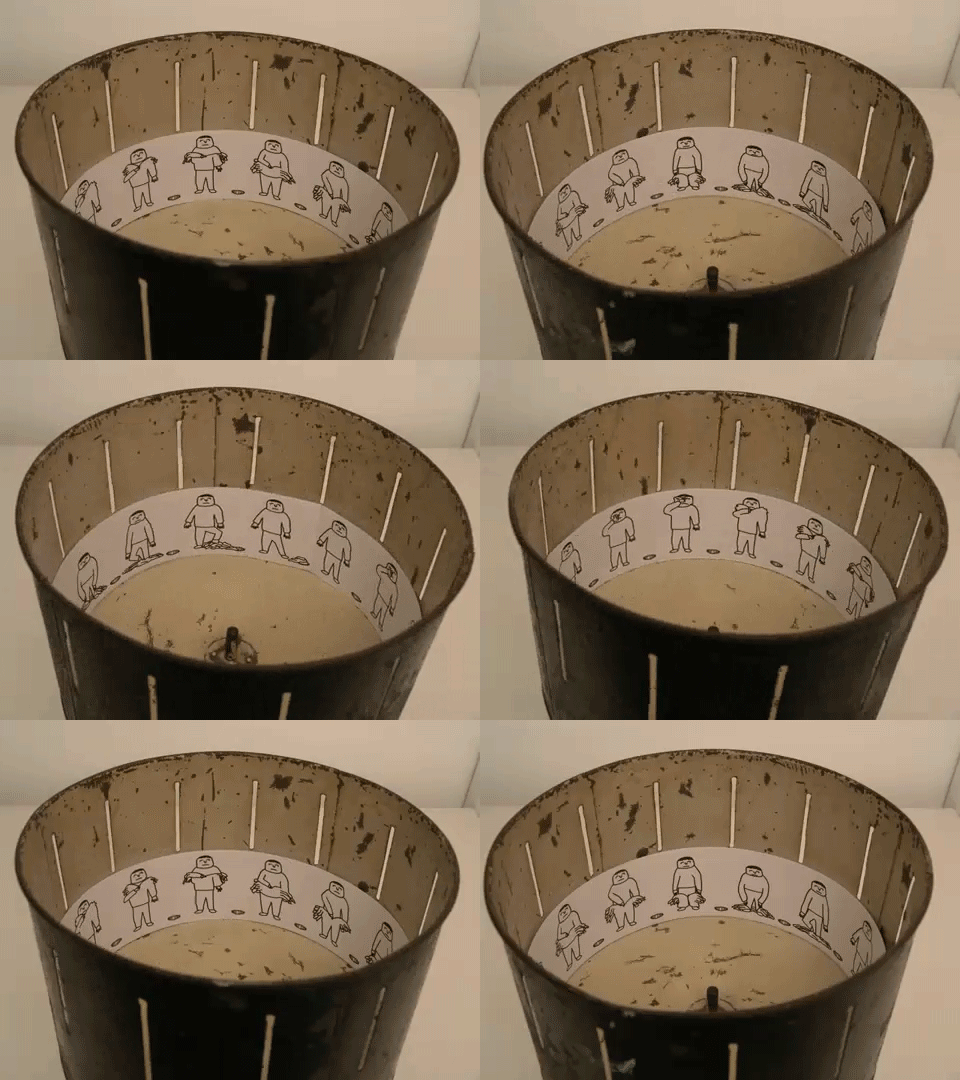
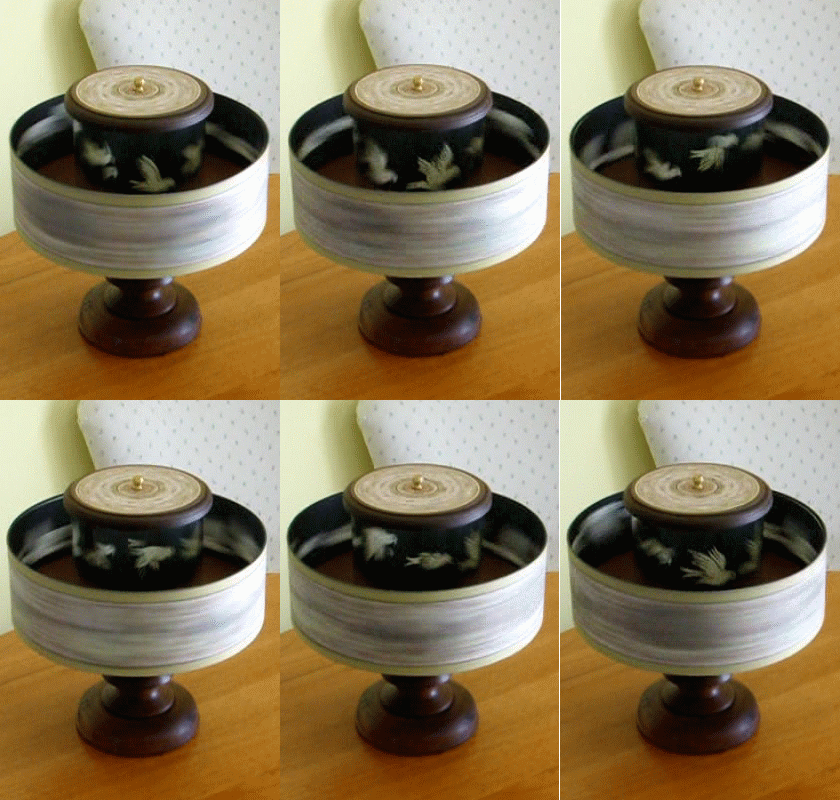
William Horner was a British Mathematician and published a mode of solving numerical equations of any degree now known as Horner’s degree. He created the Zoetrope in 1834. The Zoetrope is an development of the Phenkistoscope, it has the same principle but he changed the design slightly. Instead of having a disc, he changed it to be inside a cylinder shape object and had the animation be on the inside walls of it. William George Horner was a famous pioneer. The technique he used to create this was that he drew an image e.g. a person, and then next to the image he would draw one the same size but move there arm slightly and he would do that until he drew all the way around the cylinder and once the cylinder as spun at a certain speed you could se the images come together.
Eadweard Muybridge
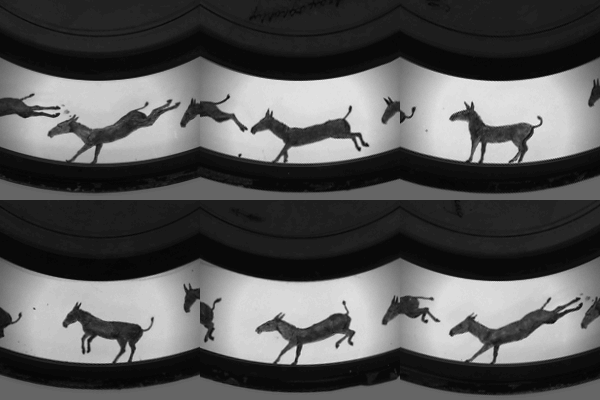
Eadweard Muybridge was a professional photographer who invented the Zoopraxiscope in 1879. He was born in 1830 and died in 1904. This is concidered to be the first movie projector made. The Zoopraxiscope projected images from rotating glass discs in rapid succession to give the illusion of motion. In 1874 he shot and killed his wife's lover, Major Harry Larkyns this could have potentially ended his inventing career but he was acquitted in jury trial on the grounds of justifiable homicide. His invention came about when the Californian governor got in contact with him to settle a bet, the bet was whether or not all of a horses hooves left the ground whilst in a sprint. Leland Stanford the governor believed they did so in 1972 Eadweard began to try find out what he done was set 12 cameras in a line and let a horse run past and took the pictures in time with the horse running. This proved that Stanford was right. Eadweard improved on this technique between 1878 and 1884. He painted the images of the horses running not glass plates and then shone a light through them whilst they were spinning this made it project and you could see the horse galloping. This inspired devises such as the ones Thomas Edison invented.
Developers of Animation







Lumiere Brothers
The Lumiere Bros were brothers from France, Louis (1862 - 1954) and Auguste (1864 - 1948). The brothers invented Cinematographe, which was a camera, printer and proojector device. They used a frame rate of 16 fps which made the noise of the device very quiet. The brothers took Eadweard's invention and reinvented it to be better. They started patenting their Cinematographe device in 1895. The Lumiere Brothers arent only known for their pioneering in animation but also their discovery of making moving films and editing.


Willis O'Brien
Willis O'Brien (1886 - 1962), was an American stop motion picture SFX and a stop motion animation pioneer. He is considered to be responisble for some of the best-known images in cinema history. Some of his best works are The Lost World (1925), King Kong (1933) and Mighty Joe Young (1949). In his early years he was employed by Thomas Edison at his company to make a series of short film with then lead him to make his film with Harry O. Hoyt, The Lost World. 1925 was the first time models were used for animation, Willis O’Brien started this technique in The Lost World. He took inspiration from animators who drew cartoons he realize that you could do it but using toy figures or clay he focused on animal and human figures. he also was the animator for king Kong he later improved his techniques by making there movements smoother and even adding colour. One of his films ‘Mighty Joe Young’ one an academy award for the best visual effects. As he was one of the first to use clay and real objects he was always trying to do things bigger and better and he had a lot of project including ‘war eagles’ which was about dinosaurs, Viking and eagles in a war.
Ray Harryhausen
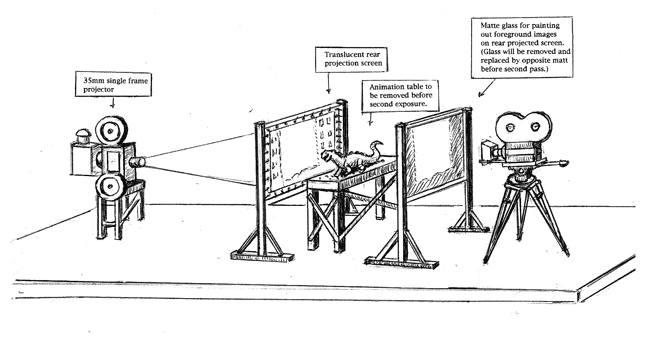
Raymond Frederick "Ray" Harryhausen was an American visual effects creator, writer, and producer who created a form of stop-motion model animation known as "Dynamation". Dynamation is a technique which split screen with rear projection. Dynamation made making a film a lot easier if the set/background was detalied. It meant he could film the main character and then add the background. Some of his most popular and best works are; The Valley of Gwangi (1969), The 7th Voyage of Sinbad (1958), Jason and the Argonauts (1963) and his last film he made before retiring, Clash of Titams (1981). He also worked on the film Mighty Joe Yound, with Willis O'Brien. Harryhausen who started being intrigued by the world of animation in the 1930’s took inspiration of O’Brien’s king Kong after his friend got him a meeting with him he managed to show him some of his work and O’brien told him to take classes to build on his art skills. Harryhausen found an inspiring writer and together they started making animated shorts. He spent a lot of his time studying the movements of animals at zoos and he later went on to make feature films such as ‘The Clash Of The Titans’ in 1981 this was the last film he done effects on. Directors such as George Lucas and Steven Spielberg say he was there inspiration to many of their most ambitious projects.
Jan Svankmajer
Jan Svankmajer is a Czech filmmaker and artist, he is a self-labeled surrealist known for his animations and features. He is known for making fast paced scenes and making objects come to life in his animations. He is one of the most celebrated animators in theworld, some of his best films are; Alice (Něco z Alenky) (1988), Faust (Lekce Faust) (1994), Dimentions of Dialogue (Možnosti dialogu) (1982) and Lunacy (Šílení) (2005). He is currently working on Insects (Hmyz) set to be released in 2017. Jan Svankmajer was a surrealist and some of his work could be considered a bit obscure however he is still recognized as one of the leading pioneers he used clay in most of he work, he also used puppets and drawings. a lot of his work included everyday objects coming to life. In his 1992 his film food not only included stop motion animation with still objects but also with an actor this is called pixilation this is where am actor has a picture taken and moves a little bit and so on this is exactly the same as doing it with clay but is more rarely used as it is harder for an actor to stay in the same position for a long amount of time.




Aardman Animation, Ltd.
Aardman Studios is a british animation studio based in bristol. It is most widely know for its claymations using plasticine, although now they use computer animations a lot. All of their stop motion fils are amoung the highest grossing stop motion films. Their first computer animation was Flushed Away (2006) which gained $64,488,856 in the box office and was very sucsessful. Some of their other films include; Chicken Run (2000), Wallace & Gromit: The Curse of the Were-Rabbit (2005), Arthur Christmas (2011) and Shaun the Sheep Movie (2015).
Tim Burton
Tim Burton is an american film director, producer, artist, writer and animator. He is known for his dark, gothic and quirky films such as; Beetlejuice (1988), Edward Scissorhands (1990), The Corpse Bride (2005) and The Nightmare Before Christmas (1993). In his early years he was heavily influenced by Dr. Seuss and Roald Dahl. At the beginning of his career he worked as an animator for Walt Disney. Tim is known worldwide for his work in films and animations and his highly credited for it. After studying at an art college Tim Burton attracted the interests of Disney and they offered him an apprenticeship in the creative process of animations. However he didn't work there very long as his style of animation clashed with Disney, and he wanted to direct his own films. He is known for many of his big films such as Edward Scissor Hands, Batman, Beetle Juice but he has also directed a lot of animation films like Corpse Bride there is a direct connection between his live action projects and his animated as they are both very dark and gothic but still family friendly. Burton has been nominated best animator for two of his films, which are Frankenwinie and corpse bride. He also mixes he use of animation and live action in many of his films.
Contempary Animators


bottom of page